Binaural Beats vs Isochronic Tones: Which Is Better for Manifesting?
Binaural beats need headphones and feel subtle; isochronic tones pulse through any speaker. Here is how they differ and which to pick for your manifestation practice.
Photo: Image Catalog / flickr (CC0)
Open any collection of manifestation audios and you will meet two technical words almost at once: binaural and isochronic. Both promise to guide your brain into a calm, focused or sleepy state. Both are sold with similar artwork. Yet they work in different ways, and the difference changes how, when and where you can use them.
This comparison explains each one in plain language, puts them side by side in a table, and finishes with clear "choose this if" guidance. You do not need any background in audio or science to follow along.
A quick note on expectations. Neither tool has strong scientific backing as a way to change your brain state on demand, and neither makes outside events bend to your wishes. Many people do find them helpful for settling down and focusing, which is a fair reason to try them. Results vary.
How binaural beats work
Imagine a tone at 200 Hz playing in your left ear and a tone at 206 Hz in your right. Neither ear hears a beat. But your hearing system compares the two signals and perceives a gentle pulse at the difference, 6 Hz. That perceived pulse is the binaural beat.
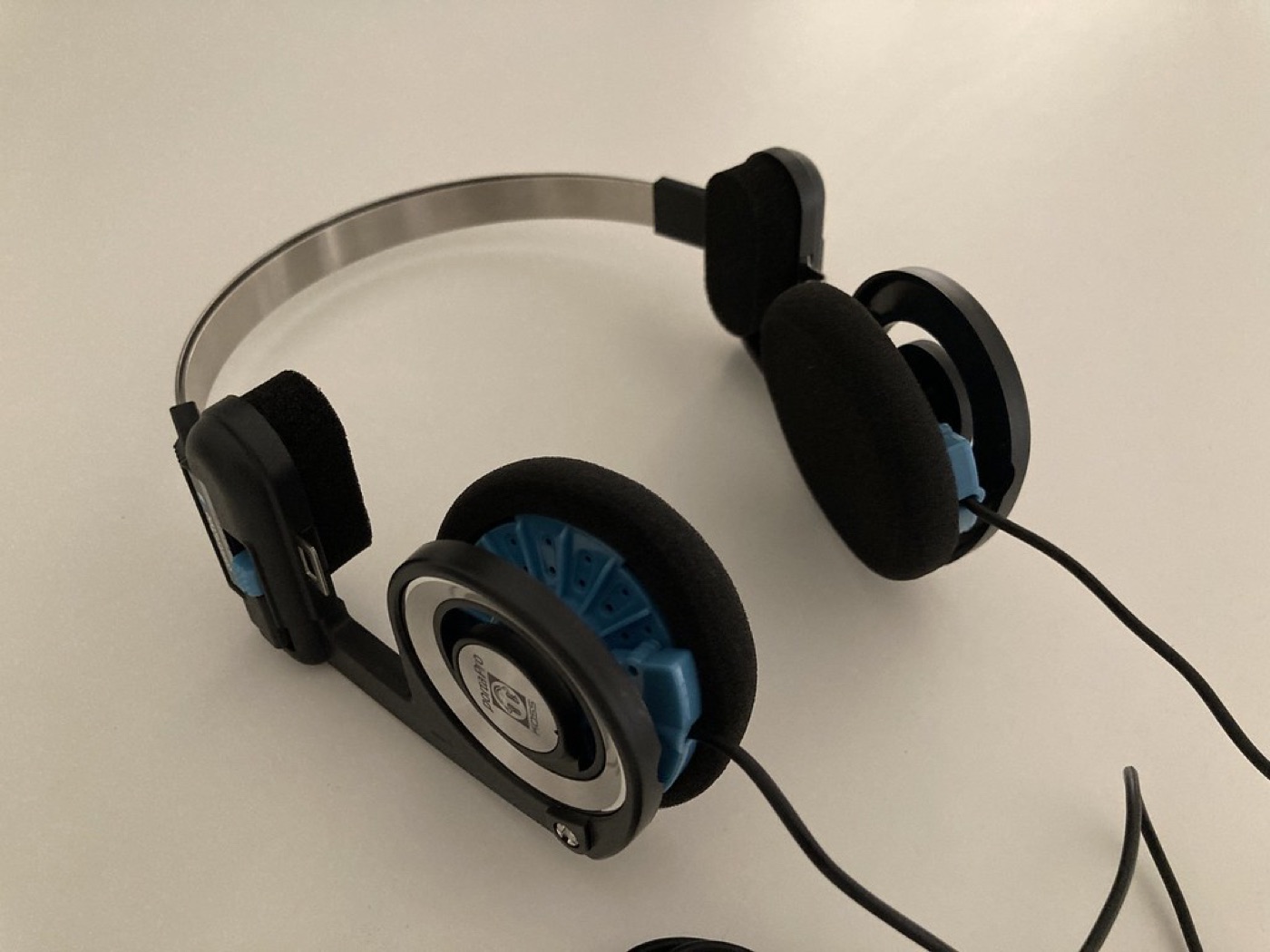
Because the beat is built from the difference between two ears, headphones are not optional. Play a binaural track through a speaker and both ears hear both tones mixed together, so the effect disappears. Earbuds are fine; the point is that each ear gets its own channel.
The claim behind binaural audios is that the brain tends to follow the beat frequency, nudging you toward slower rhythms such as theta for relaxation or alpha for calm focus. Our guide on theta waves explains those bands and what the evidence does and does not support.
In practice, binaural beats feel soft. Many people barely notice the pulse at all, especially when it is hidden under music or rain sounds. That subtlety is a feature if you dislike obvious rhythms, and a drawback if you want to feel that something is happening.
How isochronic tones work
An isochronic tone is simpler. A single tone is turned on and off at a regular rate, for example six times per second. There is no trick between the ears; the rhythm is right there in the sound.
Because the pulse is in the audio itself, isochronic tones work through any speaker, including a phone on the nightstand or a small speaker in the kitchen. You can share them with a room, play them during a yoga stretch, or listen while doing a quiet chore.
The experience is more noticeable. Some people love the clear, steady pulse because it gives the mind an obvious anchor, like a slow metronome. Others find it mechanical or even irritating, particularly at higher pulse rates. Mixing the tone under soft music usually solves that.
Binaural beats vs isochronic tones at a glance
| Feature | Binaural beats | Isochronic tones |
|---|---|---|
| How the pulse is made | Two slightly different tones, one per ear | One tone switched on and off |
| Headphones needed | Yes, always | No, any speaker works |
| How it feels | Subtle, smooth, easy to miss | Clear, rhythmic, sometimes sharp |
| Good for falling asleep | Yes, if you sleep comfortably in earbuds | Yes, through a quiet speaker |
| Good for shared spaces | No | Yes |
| Good for active visualization | Yes | Yes |
| Works with hearing loss in one ear | Poorly | Yes |
| Tolerance for pulsing sound needed | Low | Higher |
| Evidence that it changes brain rhythm | Limited and mixed | Limited and mixed |
Both can be layered with a carrier pitch like 528 Hz, which some listeners find more pleasant. If you are curious about that pitch and its reputation, see our 528 Hz guide.
A third option: monaural beats
For completeness, there is a middle path. Monaural beats mix the two close tones before they reach your ears, so the beat is already in the sound, like an isochronic tone but smoother. They work through speakers and feel less choppy than isochronic pulses. They are less common on manifestation tracks, but if you see the label, you now know what it means.
What neither one can do
It helps to say this plainly. No sound can place a thought in your mind, change your bank balance or draw a person toward you. There is no scientific evidence that beats or tones carry intentions.
What they can do is give your attention a steady place to rest. That matters because manifestation, stripped of the mystique, is a practice of repeated, focused attention on what you want, followed by action. A tool that makes you sit still for fifteen minutes and picture your goal clearly is useful. It is useful because of what you do with those fifteen minutes.
If you use these tools at night, read our guide to subliminals and sleep affirmations first, since the same honesty rules apply there.
Which to choose if…
You listen mostly in bed and sleep in earbuds comfortably. Binaural beats. The subtle pulse is easy to drift off to, and headphones at night are not a problem for you.
You share a room or want sound in the background while you cook, stretch or journal. Isochronic tones. They work through a speaker and do not require everyone to wear headphones.
You find any pulsing sound distracting. Binaural beats under music or nature sounds. They are the gentlest option.
You want an obvious anchor to bring a wandering mind back. Isochronic tones. The clear rhythm gives you something to return to.
You have hearing loss in one ear or wear a hearing aid. Isochronic tones. Binaural beats depend on both ears receiving a clean signal.
You are not sure. Try one week of each, ten minutes a day, and keep a one-line note after every session. Pick whichever you kept returning to.
Try this
A one-week A/B test for your own ears
- Choose one binaural track and one isochronic track with a similar purpose, such as "relaxed focus."
- Days one to three: play the binaural track with headphones for ten minutes, holding one clear intention. Afterward, write a single line: how you feel, from "tense" to "settled."
- Days four to six: repeat with the isochronic track through a speaker, same time of day, same intention.
- Day seven: read your six lines. Note which days felt easier and which track you looked forward to.
- Keep the winner for the next month. Drop the other without guilt.
Keep going
The difference comes down to delivery. Binaural beats are subtle and need headphones; isochronic tones are clear and play anywhere. Neither is magic, and either can give a manifestation practice a steady rhythm to lean on. To get more from whichever you pick, read 11 ways to get more from any manifestation audio. If you are weighing full programs rather than single tracks, our comparison of the best manifestation audio programs can save you some searching.
Questions people ask
Are binaural beats or isochronic tones more effective?
There is no clear winner in the research, which is small and mixed for both. The better one is the one you will actually use consistently in a setting that fits your life.
Can I use binaural beats with just one earbud?
No. The beat exists only when each ear hears its own tone. With one earbud you simply hear a single steady pitch.
Are these sounds safe?
For most people, yes, at a gentle volume. If you have epilepsy, a seizure history or a heart rhythm device, talk to your doctor before using rhythmic audio, and never listen while driving.
Do I need the pulse to match a specific frequency?
Tracks are labelled by target band, such as theta or alpha. Choose based on the state you want, relaxation versus alert focus, rather than chasing an exact number.
Lunar Quill editorial team
We write about manifestation the way we would explain it to a friend: what the tradition says, what is actually known, and what to try tonight. No invented studies, no success stories we cannot verify, no promises.
Manifestation is a mindset practice, not a guarantee. Results vary from person to person and depend on what you actually do next. Nothing here is medical, psychological or financial advice. See the disclaimer.